

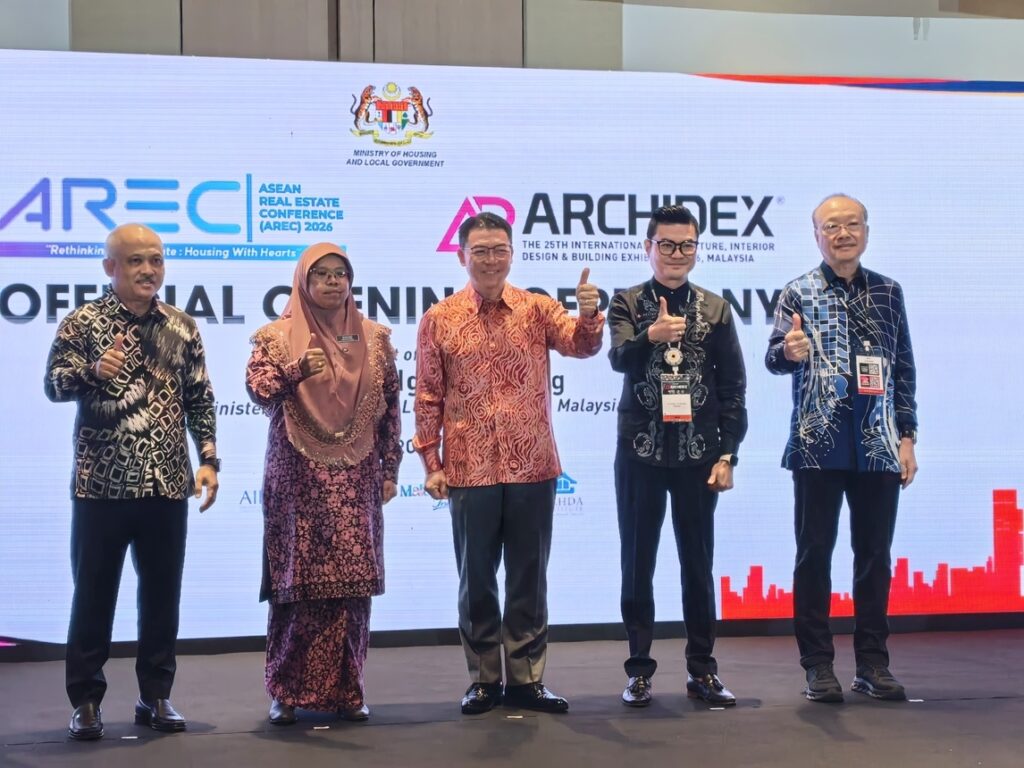
Architecture, Interior Design and Building Exhibition (Archidex) 2026 marked its milestone 25th edition from July 29 to August 1, 2026, at the Malaysia International Trade and Exhibition Centre (Mitec) in Kuala Lumpur.
Focused on “The Bold Future” and co-held with the ASEAN Real Estate Conference (Arec) under the sub-theme “Rethinking Real Estate: Housing with Hearts”, the exhibition featured over 860 local and international exhibitors across 10 halls, targeting RM1.4 billion in business transaction, reinforcing its position as Malaysia’s largest and Asia’s leading architecture and building event.
Jointly organised by Malaysian Institute of Architects (PAM) and C.I.S Network, Archidex 2026 featured exhibitions, business matching and conferences related to architecture and the built environment.
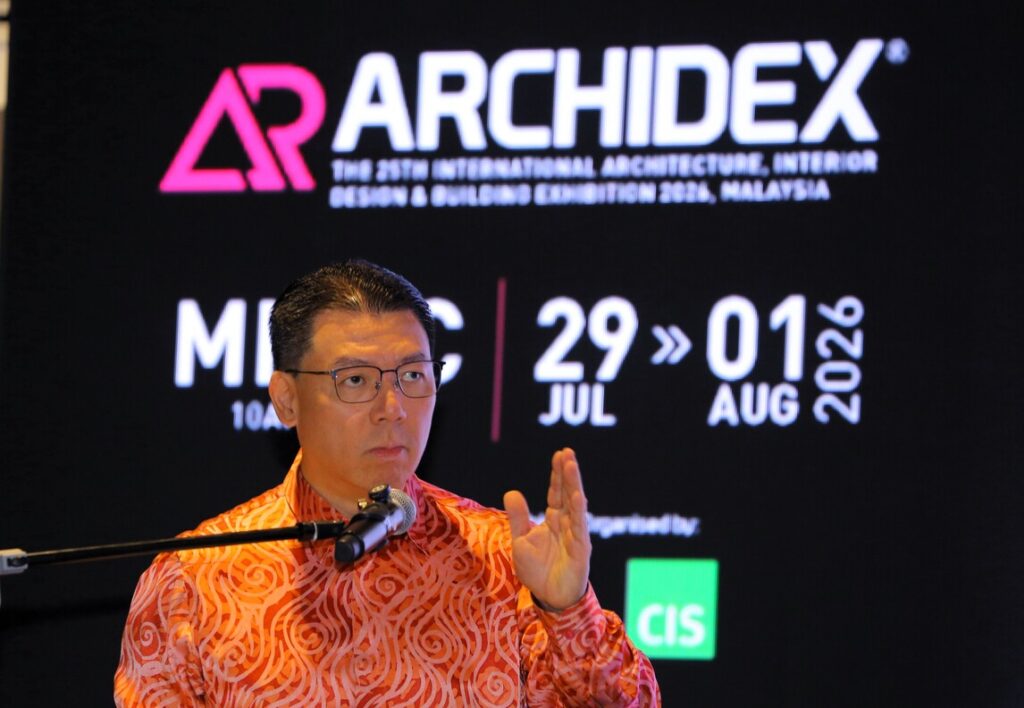
The opening ceremony for both Archidex 2026 and Arec 2026 was officiated and launched by Housing and Local Government Minister Nga Kor Ming.
In his opening speech, PAM president Dexter Koh emphasized that the institute’s primary mission remains advancing architecture and the profession to enrich society and the built environment.
“Platforms like Archidex are a direct reflection of this commitment. Archidex is not just an exhibition; it is one of our primary vehicles for advancing the profession, bringing together design, industry innovation, and public policy to ensure that what we build genuinely enriches the society we serve,” he said.
Koh said Archidex 2026 core theme, ‘The Bold Future,’ challenges the architecture and design community to think differently rather than just simply focus on physical expansion.
“Being bold does not always mean building bigger. Often, it means thinking differently. It means embracing innovation, questioning old assumptions, and making thoughtful choices that yield long-term value.
“Malaysia is exceptionally well-positioned to lead regional conversations on design and urban development, and through continued partnership, we can design spaces that reflect our highest aspirations,” he said.
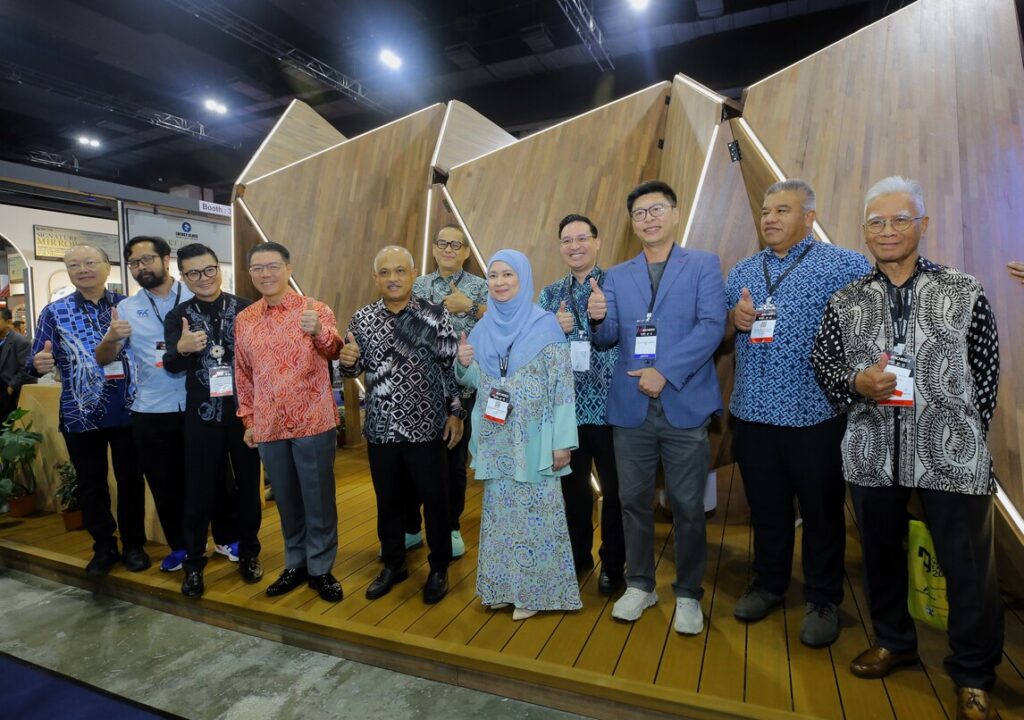
Running alongside Archidex, the Arec, organized with the Ministry of Housing and Local Government (KPKT), acts as a crucial link between government policies and market action. It unites leaders, experts, and investors to match national urban goals with regional growth.
“Arec bridges design with the broader mechanics of real estate, development, and urban growth. The spaces we create are shaped not only by spatial design, but also by planning decisions, investment priorities, and societal aspirations.
“As Malaysia grows, open dialogue between policymakers, investors and communities becomes essential.
“Arec creates that vital space to ensure our cities remain competitive, sustainable, and human-centered,” said Koh.
C.I.S Network president Dato’ Vincent Lim said that the Arec strengthens the Archidex ecosystem by uniting industry leaders and policymakers to drive housing cooperation, exchange ideas and advance sustainable urban growth across Southeast Asia.
“This convergence creates a more complete value chain – connecting vision, design, development and solutions to shape the future of our built environment,” he said.
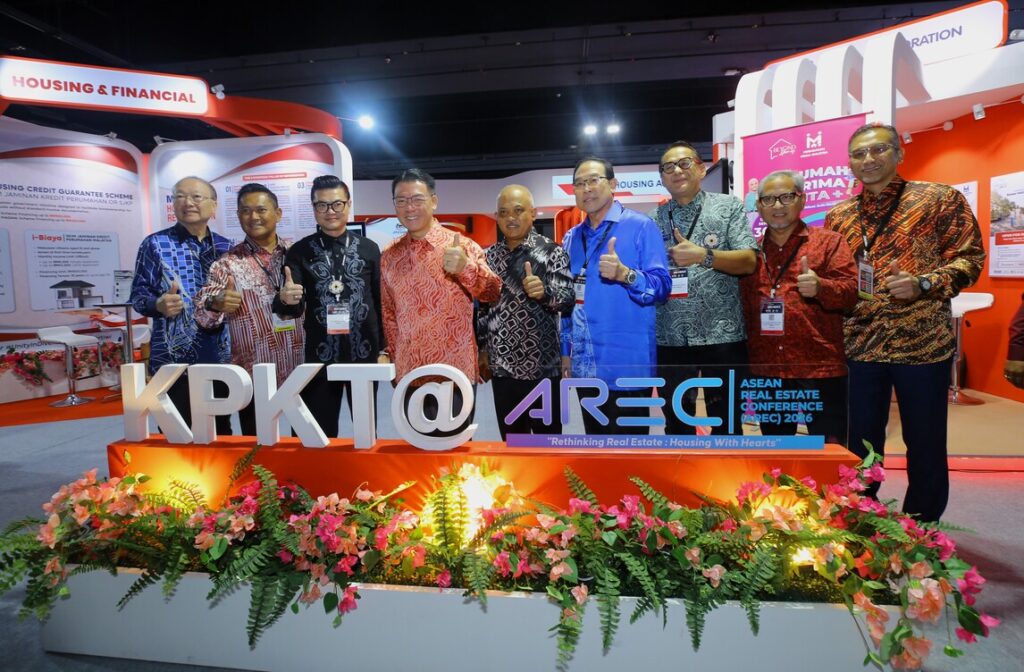
Housing and Local Government Minister Nga Kor Ming highlighted the Arec theme, “Rethinking Real Estate: Housing with Heart,” emphasizing that future developments must build sustainable, inclusive communities where cities are not just functional and liveable, but also truly lovable for all residents.
“A liveable city begins with a simple principle, that every family deserves access to a quality home at an affordable price. A lovable city goes further. It connects people to employment, quality education, healthcare and green spaces.
“This is what Housing with Heartmeans: a people-centred approach where communities thrive. And this vision is already guiding Malaysia’s housing agenda,” he said.
Nga said that the 13th Malaysia Plan will integrate Transit-Oriented Development (TOD) principles into public housing. This aims to connect homes with public transport, employment centres, schools, healthcare facilities and essential amenities to improve urban liveability and reduce traffic congestion.
“We are also investing in the renewal of existing public housing by replacing ageing lifts and converting underutilised common areas into children’s libraries and community spaces.”
Nga said that since December 2022, the ministry has successfully revived 1,647 abandoned housing projects worth over RM150 billion. He stressed that comprehensive legislative and housing reforms are vital to boost confidence in Malaysia’s real estate market.
“Malaysia’s real estate sector has shown healthy growth over the past few years. According to the National Property Information Centre, the market recorded 416,413 property transactions worth RM241.87 billion in 2025, representing a 4.1% increase from the previous year. These figures demonstrate resilient market fundamentals and sustained investor confidence in Malaysia’s long-term growth prospects.
“Nevertheless, challenges such as supply-demand mismatches, unsold properties and abandoned housing projects continue to require decisive policy interventions,” said Nga.