

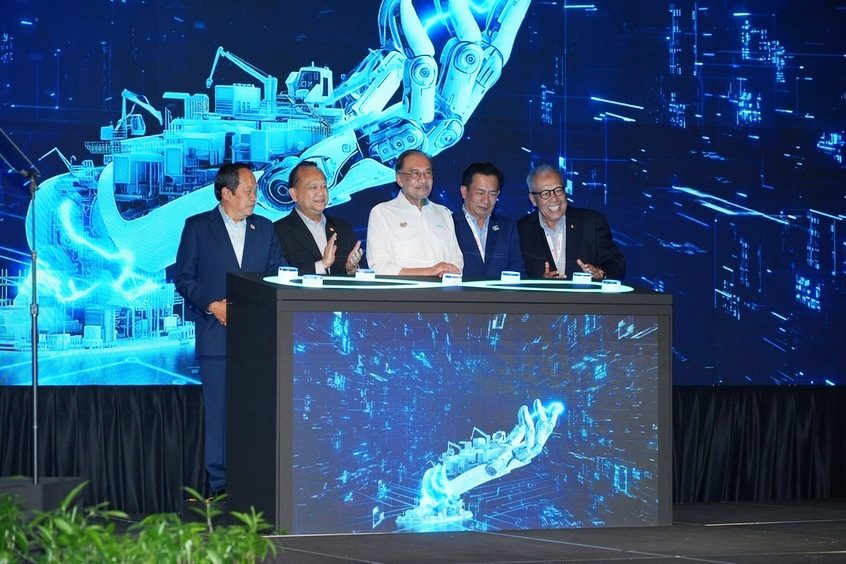
The 28th edition of International Construction Week (ICW) and BuildXpo Malaysia 2026 officially opened on Nov 10 at the Malaysia International Trade and Exhibition Centre (Mitec) in Kuala Lumpur.
To successfully transition away from conventional building methods, the Malaysian construction industry must execute a strategic shift focused on technology adoption and homegrown innovation; industrialised construction and stronger collaboration and workforce upskilling to improve productivity, strengthen local capabilities and remain competitive in a changing global landscape.
This was underscored at the opening of ICW & BuildXpo Malaysia 2026 officiated by Prime Minister Dato’ Seri Anwar Ibrahim.
“We can no longer depend solely on conventional construction methods to meet the growing needs of the country. Rising expectations on quality, productivity, affordability and sustainability require us to embrace new technologies and more efficient ways of working,” he said.
The premier annual event for the construction and built environment industry in Malaysia and Southeast Asia brings together government representatives, industry leaders, contractors, professionals, technology providers and international delegates to exchange knowledge, showcase innovations and explore opportunities across the construction ecosystem.
The event comprises the 28th edition of ICW and the fourth edition of the International Building and Construction Exhibition (BuildXpo Malaysia).
Hosted by the Ministry of Works, Malaysia and the Construction Industry Development Board (CIDB) Malaysia, and jointly organised by Qube Integrated Malaysia Sdn Bhd (Qube), the event runs from Nov 10 to 12, 2026, under the theme “Beyond Limits” and features more than 110 exhibitors from close to 10 countries and regions.
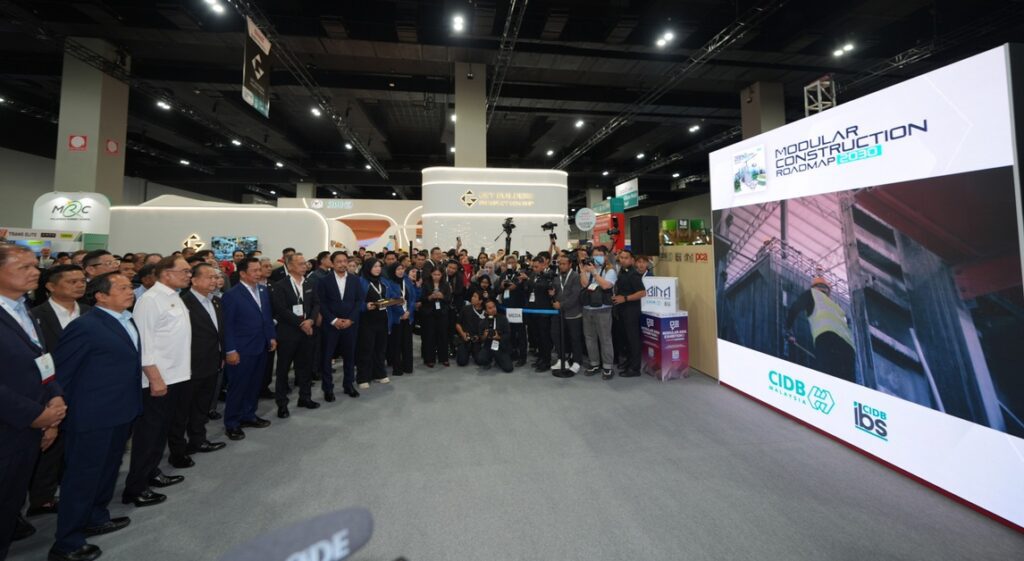
A key highlight of the opening was the launch of the Malaysia Modular Construction Roadmap 2026–2030, marking a significant strategic pivot toward modernizing the nation’s building sector.
Anwar said the roadmap provides a strategic direction for accelerating the adoption of modular construction and strengthening Malaysia’s industrialised construction capabilities.
“Modular construction offers an opportunity to transform the way we build. By integrating design, engineering, manufacturing, logistics and on-site assembly, modular construction has the potential to improve construction efficiency, shorten project timelines, enhance quality consistency and optimise resource use,” he said.
He said the roadmap highlights the importance of developing a stronger domestic ecosystem, enabling Malaysian companies to build, produce and commercialise construction technologies.
The opening also saw strategic collaborations involving CIDB’s Industrialised Building System (IBS) initiatives with PCA Group and NUVAH, supporting the development and localisation of advanced construction technologies.
The collaboration with PCA Group centers on modern construction and manufacturing methods, aiming to advance industry capabilities and skills through several key pillars such as 3D modular units, Design for Manufacturing and Assembly (DfMA), off-site manufacturing, automation, Building Information Modelling (BIM) and sustainable design.
Meanwhile, the collaboration with NUVAH will support the localisation of Japanese-designed 3D concrete printing technology in Malaysia through knowledge sharing, workforce training, research and pilot applications, alongside efforts to develop local manufacturing capabilities.
These initiatives reflect the importance of translating technological innovation into practical industry outcomes. Equally important is ensuring that local contractors and small and medium-sized enterprises receive the technology, knowledge and training required to take part in the industry’s transformation.
Beyond the exhibition, ICW & BuildXpo Malaysia 2026 features a comprehensive line-up of conferences, seminars and industry engagement activities addressing key developments in construction.
Highlights include the AsiaConstruct Conference and the Impact Change Through Construction (ICTC) Conference, which facilitate knowledge exchange and regional collaboration. The programme also includes talent development initiatives such as the CIDB–CIOB Youth Arena, CIDB–MSSA Open Ideas Competition and Crane Lifting Planning Competition.
Other activities include JKR’s BAMBuild programme, which explores the potential of bamboo as a sustainable construction material, as well as QUEST Day, which recognises good practices in workmanship, safety compliance and sustainable construction.
International delegates and buyers from various markets are also expected to create opportunities for business connections and knowledge exchange.
Qube International chairman Tan Sri Dato’ Seri Dr Ir Ahmad Tajuddin Ali said the event provides an important platform for the construction community to connect and translate shared challenges into opportunities for collaboration.
“No single organisation can address these challenges alone. Progress depends on stronger connections between government and industry, technology providers and end users, as well as experienced professionals and the next generation of talent.
“This is where ICW & BuildXpo can make a difference – by bringing the industry together and turning conversations into meaningful partnerships,” he said.
The 2026 edition of ICW & BuildXpo Malaysia is targeting up to 17,000 trade visitors and approximately RM1.5 billion in projected trade value over three days.
For more information, visit https://icw.my/.






 and BuildXpo Malaysia 2026 officially opened on Nov 10 at Mitec in Kuala Lumpur.)