


The BICSI Southeast Asia Conference & Exhibition 2026 at the Sunway Resort Hotel in Subang Jaya highlighted Malaysia’s urgent need for a highly skilled ICT workforce to support its rapid growth in artificial intelligence (AI), cloud computing and data centre ecosystem.
To sustain booming investments in data centers and AI, government agencies and industry leaders are scaling up local training pipelines.
Officiated by Deputy Human Resources Minister Datuk Khairul Firdaus Akbar Khan, the two-day conference (July 21-22) brought together ICT infrastructure professionals, engineers, consultants, technology providers, data centre operators, policymakers and business leaders from across Southeast Asia under the theme “Advancing ICT Infrastructure for the AI-Connected Future.”

This marks the second time the conference has been held in Malaysia, reflecting the country’s growing role in the regional digital economy.
The high-level event is presented through the BICSI Southeast Asia Affiliate, operated by Tecnoviq Learning Academy Sdn Bhd (TECLA) under an exclusive license from BICSI, with event delivery support from Global Creative & Media Agency (GCMA).
The event received strong backing from the Ministry of Human Resources (Kesuma), Malaysia Digital Economy Corporation (MDEC), Invest Selangor Berhad, Selangor Information Technology & Digital Economy Corporation (Sidec) and Cyberview.
Industry organisations supporting it included the SME Association of Malaysia, the National Tech Association of Malaysia (Pikom) and the Malaysia Digital Chamber of Commerce (MDCC).
The conference comes at a time when Malaysia continues to attract significant investments in digital infrastructure.
As approved investments surpassed RM92.8 billion in the first quarter of 2026, including RM38.9 billion in the ICT sector per the Malaysian Investment Development Authority (Mida), and projected national data centre capacity exceedig 4,000MW beyond 2026, the need for a highly skilled ICT workforce has become increasingly critical.
Demand continues to grow for professionals with expertise in data centre engineering, cloud infrastructure, network architecture, cybersecurity and sustainable ICT infrastructure.
At the same time, TalentCorp’s Impact Study on AI, Digital and Green Economy estimates that around 697,000 Malaysian workers could face significant job-transition risks over the next three to five years due to automation, reinforcing the need for continuous upskilling and reskilling.
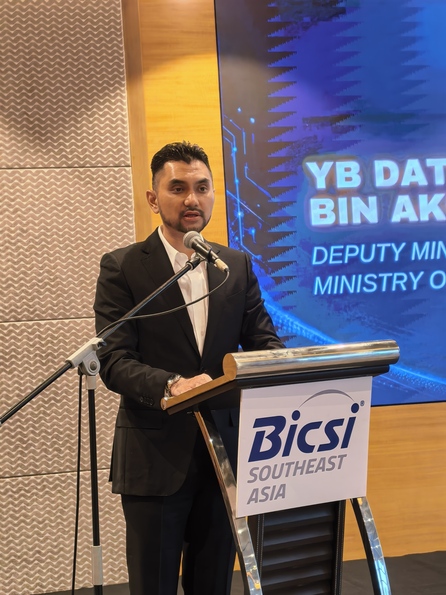
In his speech, Datuk Khairul Firdaus said the growth of AI and digital infrastructure must be supported by investments in both technology and talent.
“Today, artificial intelligence is transforming every sector, but AI does not operate in isolation. Every AI application depends on secure data centres, high-speed fibre networks, structured cabling systems, cloud infrastructure and resilient communications networks.
“In other words, there is no AI economy without world-class ICT infrastructure, and there is no world-class ICT infrastructure without world-class talent,” he said.
He added that while Malaysia’s ability to attract hyperscale data centre and digital infrastructure investments was a positive development, the country’s long-term success would depend on producing skilled Malaysian talent capable of designing, building, operating and maintaining these systems.
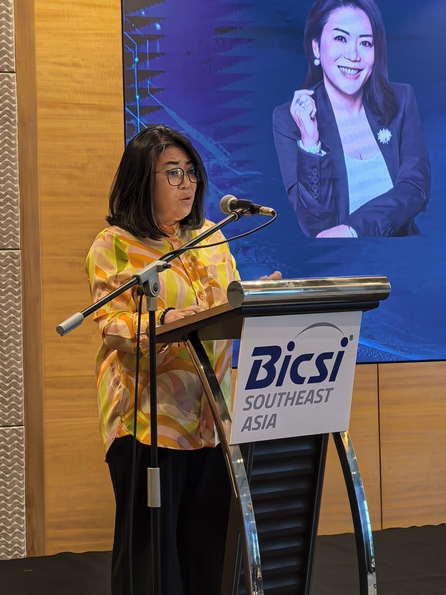
BICSI Southeast Asia Affiliate director Mary Elizabeth Cheng said Malaysia’s rapid growth in AI, hyperscale data centres, cloud computing and digital connectivity made it an ideal host for the conference.
“As Southeast Asia, and Malaysia in particular, continues to experience rapid growth in AI, hyperscale data centres, cloud computing and digital connectivity, the need for internationally recognised standards, quality training and professional certification has never been more important,” she said.
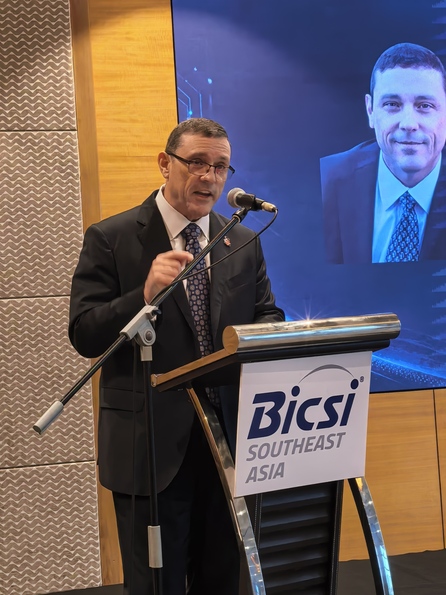
Meanwhile, BICSI chief executive officer John H. Daniels said, “Malaysia’s growth as a digital infrastructure hub will be measured not only by the facilities it builds, but by the capability of the workforce behind them.”
He emphasized that reliable ICT infrastructure is built through shared standards, strict discipline, and a highly skilled workforce, rather than by accident.
“It is built by qualified people using proven methods, working with integrity and focused on the communities, businesses and public services that depend on connected systems every day,” he added.
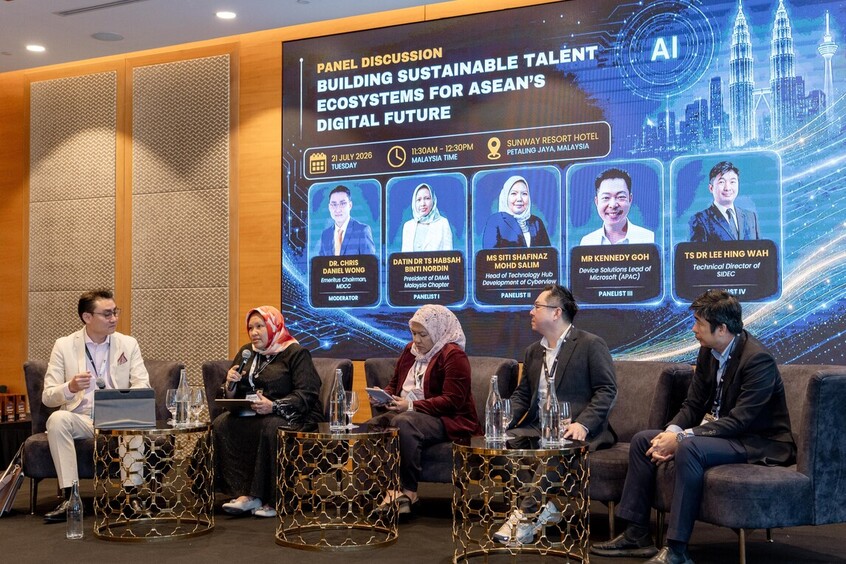
The two-day agenda included technical forums and networking engagements focusing on AI-ready infrastructure, advanced fibre connectivity, structured cabling, liquid cooling technologies, edge computing, smart buildings, cybersecurity and sustainable data centre design.
The exhibition showcased cutting-edge Information and Communications Technology (ICT) and digital infrastructure solutions from leading global and regional technology companies shaping the future of digital infrastructure.
For more information, visit bicsi-sea.org.