
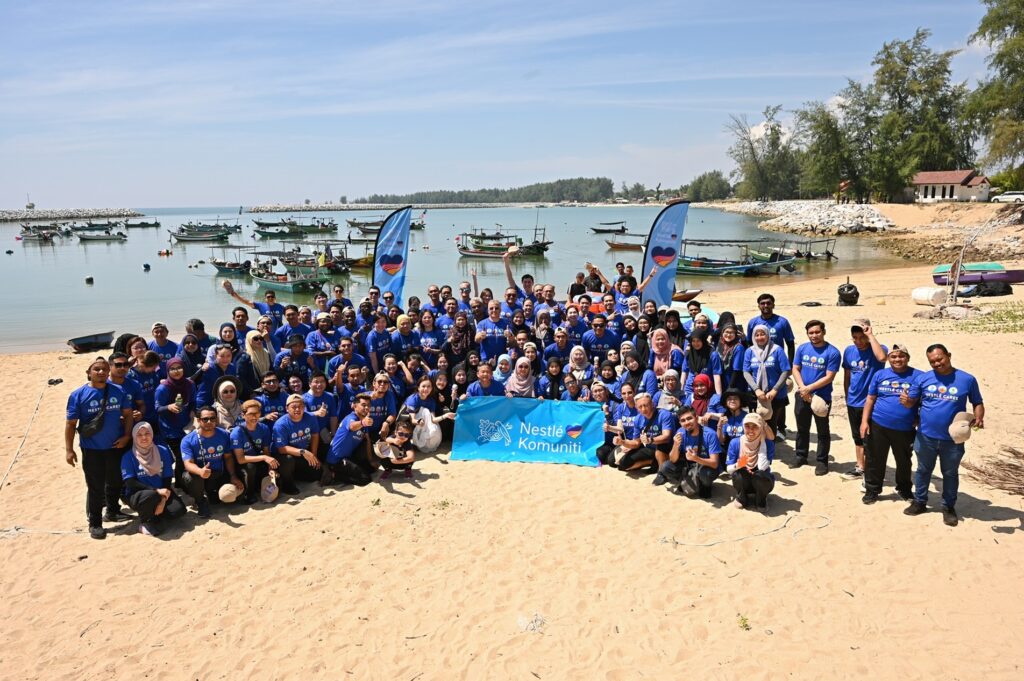
Nestle Malaysia has partnered with Universiti Malaysia Terengganu (UMT), the Fisheries Development Authority of Malaysia (LKIM) and the fishing community of Pantai Tok Jembal for marine conservation and community support efforts.
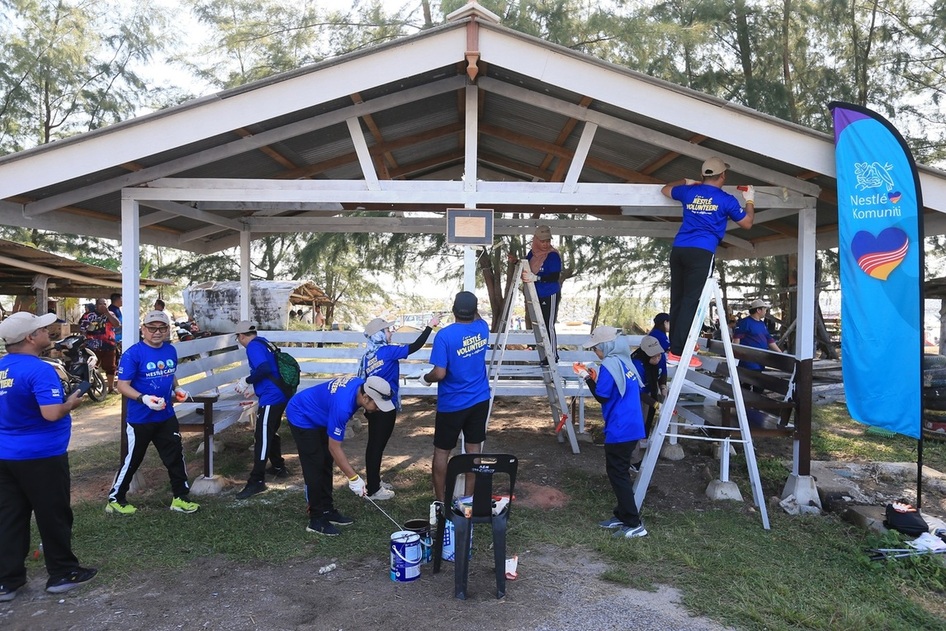
Over 350 volunteers, including Nestle employees, UMT students, and LKIM representatives joined forces, with support from the Malaysian Maritime Enforcement Agency, to remove entangled ghost nets from seabeds, clean shorelines, remove barnacles from fishing boats, repair fishing huts and distribute essential provisions to the fisherman community.
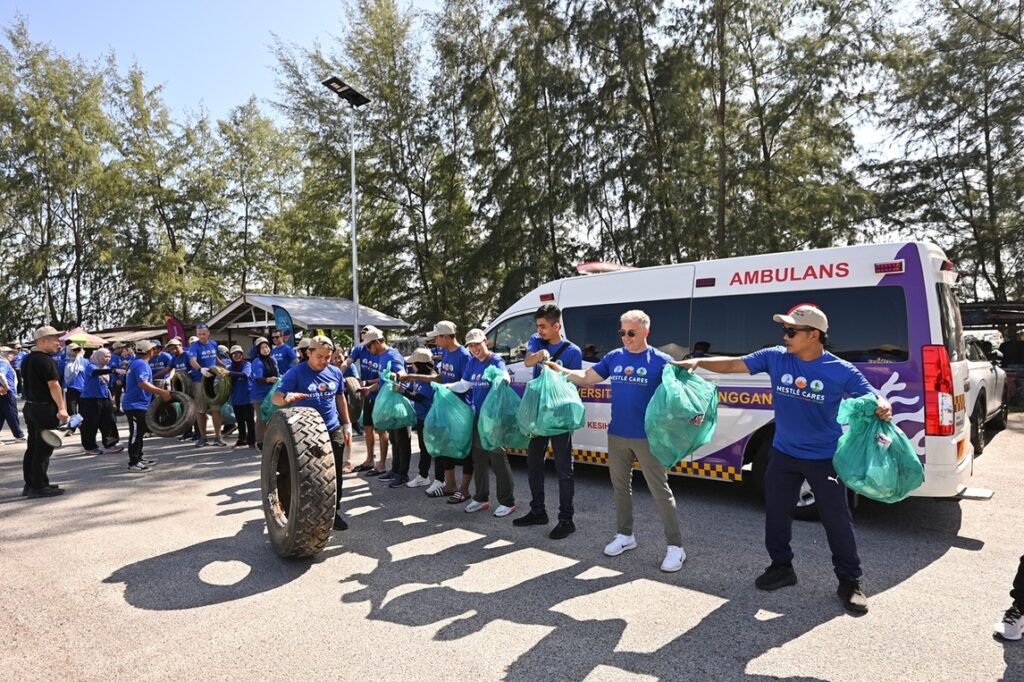
This collaboration, part of Nestle’s Sayang Komuniti Employee Volunteer Programme, focuses on rehabilitating the coastal environment and raising public awareness about ocean pollution’s impact.
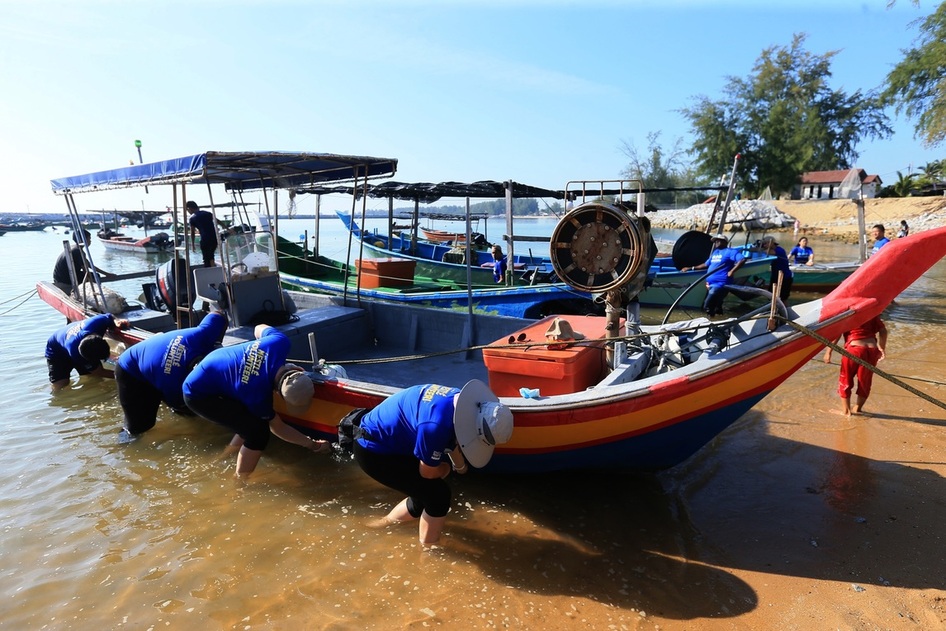
The initiative also supports the fishing community’s dependence on the ocean for their livelihoods by promoting healthy oceans and marine ecosystems.
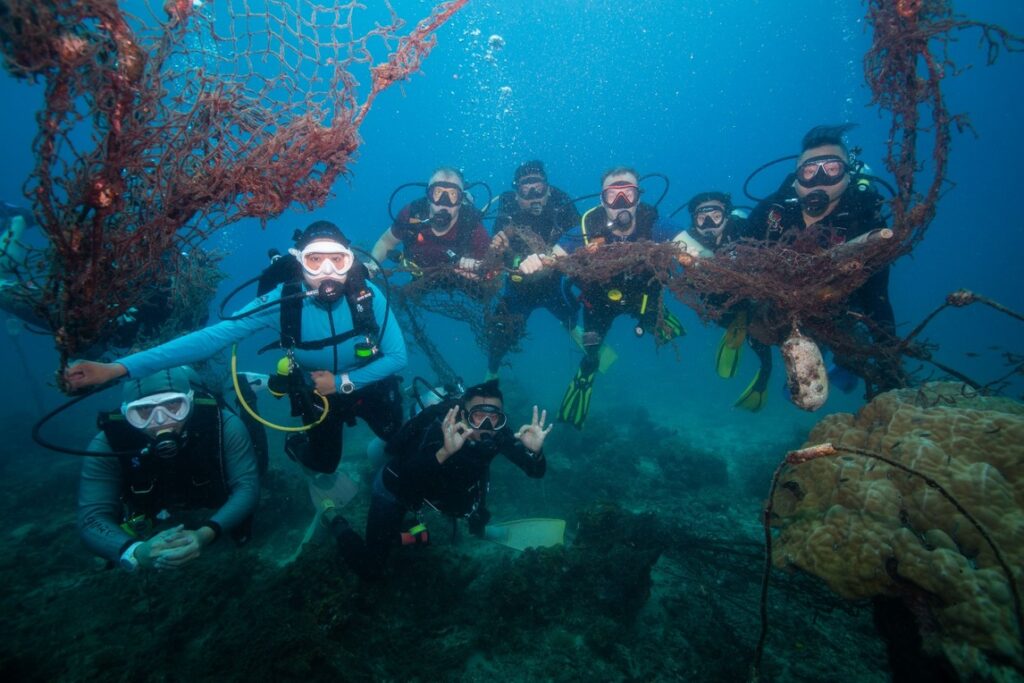
Nestle volunteers and UMT’s Ocean Heroes team also conducted an underwater cleanup near Pulau Bidong to remove ghost nets from the ocean floor. These discarded fishing nets cause boats to damage coral reefs and marine ecosystems.
With microplastics increasingly threatening our food systems, initiatives like this are not only vital for environmental health but also for strengthening Malaysia’s food security, food safety, and the long-term resilience of our coastal communities.”
UMT researchers also carried out waste audits to collect data that will support long-term marine protection.
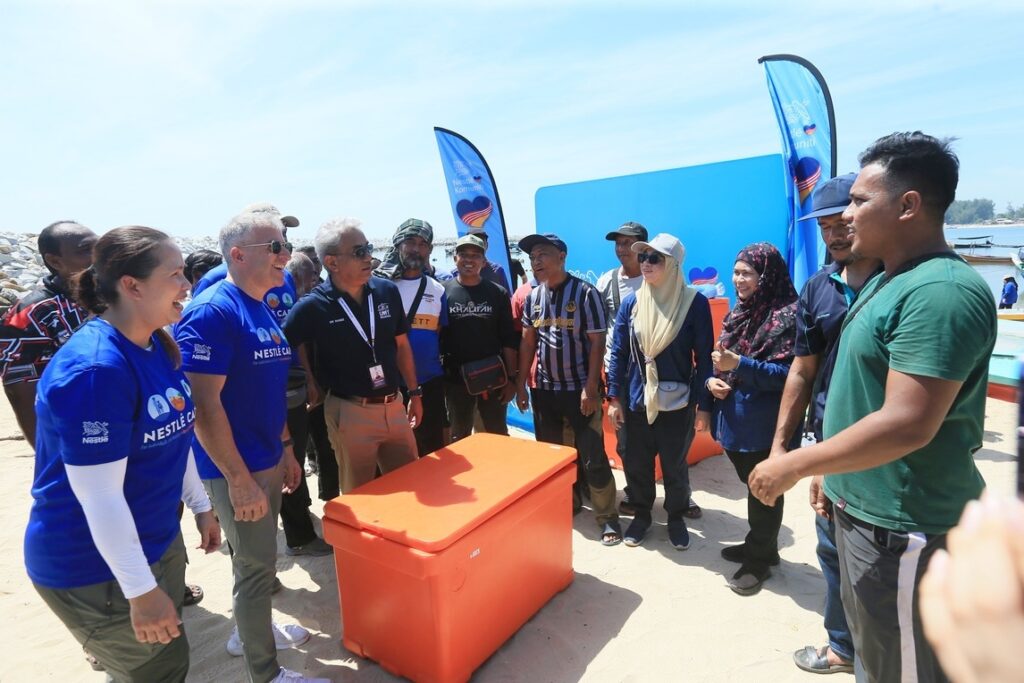
Nestle Malaysia chief executive officer Juan Aranols said the collaborative effort in Terengganu with the Pantai Tok Jembal community demonstrated the company’s commitment to both environment protection and supporting local livelihoods.
“With microplastics increasingly threatening our food systems, initiatives like this are not only vital for environmental health but also for strengthening Malaysia’s food security, food safety and the long-term resilience of our coastal communities,” he said.
Prof Madya Dr Yusof Shuaib Ibrahim, researcher of the Microplastic Research Interest Group (MRIG-UMT) said the partnership with Nestle Malaysia enabled them to translate their research findings into practical, real-world impact.
“By removing ghost nets and marine debris, we’re not only improving marine ecosystems but also directly enhancing the livelihoods of local fishing communities. This collaboration raises public awareness and strengthens the foundation for long-term environmental stewardship in Malaysia.”
Apart from Terengganu, 190 Nestle volunteers spearheaded clean-up efforts at Pantai Kelanang (Selangor), Pantai Teluk Senangin (Perak) and Pantai Tanjung Aru (Sabah), continuing the company’s long-term commitment to address plastic waste on a large scale.
All collected waste was sorted and sent to designated recyclers or approved disposal facilities.
Nestle Malaysia’s 2025 Coastal and Underwater Clean-Up initiative saw a total of about two tonnes of waste collected. Since its inception in 2019, the annual initiative has removed a collective total of almost 17 tonnes of marine waste from Malaysian shores.